I'm helping to run and speaking at a study day in London next week, 'Is there a Musical Avant-Garde today?' Come along! We're expecting great research and lively debate, and we're most excited about having a forum for ideas of musical 'avant-gardes' (however you feel about the term) that brings together different musical and scholarly traditions.
Date: Friday 21st July, 9:45am-5pm.
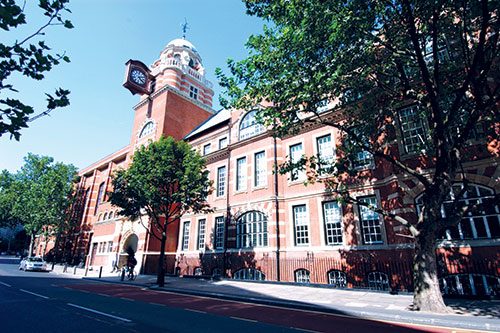
Location: City, University of London, College Building, Room AG08 (entrance via St John Street, no. 280). Nearest Tube stations: Angel and Farringdon.
Keynote: Jeremy Gilbert (University of East London).
Organising panel: Alexi Vellianitis (University of Oxford), Adam Harper (City, University of London) and Rachel McCarthy (Royal Holloway).
Registration: £8 including lunch and refreshments
If you'd like to attend, click here to register
What would it mean to talk of 'progressive' music today? Applied to the past or, especially, the present, the term ‘avant-garde’ has largely fallen out of favour within the academy, both as a description of and an imperative for new music. Yet much contemporary music - whichever combinations of limited terms such as 'art', 'popular,' 'classical' or 'commercial' might apply to it - defines itself, if often all too implicitly, in ways most often associated with avant-garde movements: a focus on stylistic complexity and innovation, and an antagonism towards aesthetic norms and the predominant modes of political thought and practice associated with them. But can such a concept still have currency for musicologists and composers?
The aim of this Study Day is to stimulate a broad, interdisciplinary conversation about how, if at all, to talk of an avant-garde in musical cultures today. For the purposes of this conference, the term ‘avant-garde’ is fluid, but is broadly defined as a particular idea and praxis of a music considered more progressive than certain others.
We invite scholars and practitioners from different fields to address the ways in which musical avant-gardes today are both practiced and discursively constructed. Topics for discussion could include, but are not limited to the following:
- Might there be one, distinct avant-garde (as our title suggests) or many? Should there be one or many?
- How is the avant-garde politically motivated, and how does it contribute to discussions about race, class, and gender? Is it necessary that the musical avant-garde be a mouthpiece for social and political issues, or can these remain indirect, implicit?
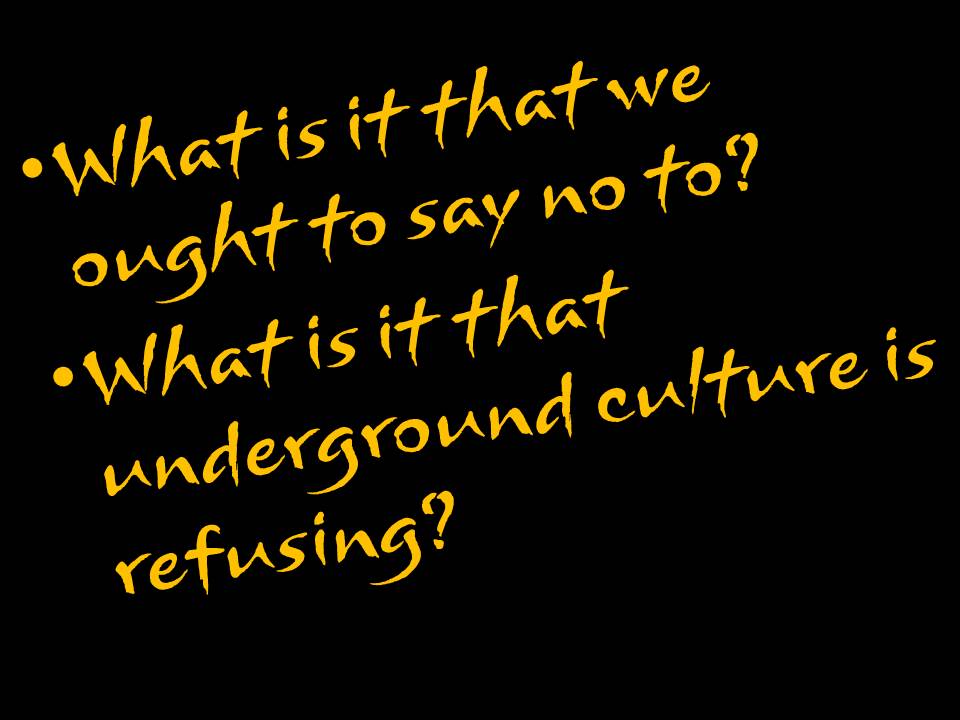
- Is the musical avant-garde located within ‘classical’ or ‘art’ or ‘popular’ or ‘experimental’ music, or none of the above? Can we (still) locate avant-gardes within, variously, art-music, bohemian, bourgeois, academic, urban or minority cultures? Is a musical avant-garde synonymous with an 'underground,' a 'counterculture' or a 'subculture'? Is the avant-garde merely a Western concept or can it be discerned elsewhere? To what extent are all such distinctions even useful?
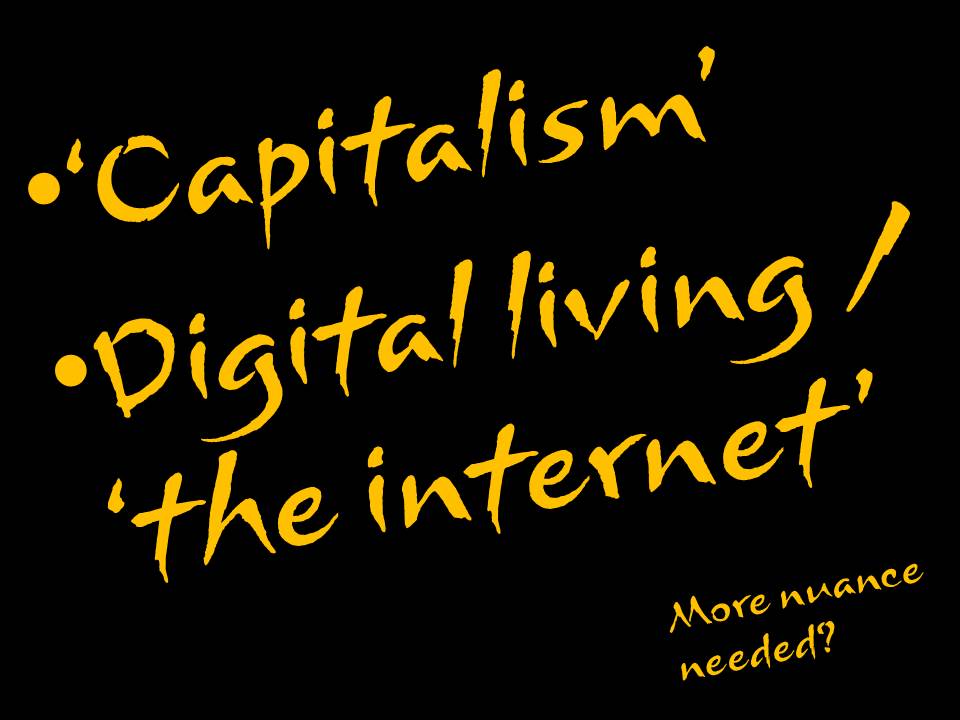
- What is the present relationship between avant-gardes, patronage, and institutions? Should avant-gardes avoid direct interaction with capital and other forms of social organisation, or should they embrace them? How do musical avant-gardes interact with and condition physical space? How do they relate to emerging technologies
- Ultimately: is progression in musical aesthetics a possible or desirable goal? What might we demand of a musical avant-garde, and what might it demand of us?
We gratefully acknowledge funding from the Royal Musical Association.
Timetable (approximate):
09:45 Arrival and Coffee
10:00 Welcome and Introduction
10:20 Max Erwin: 'Political Music After Sound: Konzeptmusik and the Complicity of the Avant-Garde'
10:50 Alistair Zaldua: '"Small and Ugly": Critical Composition and the Avant-Garde'
11:20 Lauren Redhead: 'The Avant-Garde as Exform'
11:50 (end of first session)
13:00 Rachel McCarthy: '"The Beat Gets Closer': Post-Capitalist Potential in Girls Aloud's 'Biology'
13:30 Adam Harper: 'Object: Resistance: Underground Music Institutions, Discourse, and Representation'
14:00 (ten minute break)
14:10 Alexi Vellianitis: 'Street Culture and the Musical Avant-Garde'
14:40 George Haggett: 'Towards a Sensual Operatic Ekphrasis in George Benjamin and Martin Crimp's
Written on Skin'
15:10 (ten minute break)
15:20 Jeremy Gilbert: Keynote
16:05 Plenary Session with Jeremy Gilbert, Lauren Redhead and Ian Pace
17:00 (end)
Abstracts (in chronological order):
Max Erwin: 'Political Music After Sound: Konzeptmusik and the Complicity of the Avant-Garde'
This paper seeks to clarify the historical, social, and aesthetic precedents, as well as their broader implications, for New Conceptualism in general, with specific reference to the music of Johannes Kreidler, Patrick Frank, and Celeste Oram. Pursuant to this end, I examine Kreidler’s work Fremdarbeit (2009) and how it deploys both veiled self-critique and a radical repositioning of artistic engagement, from autonomy to complicity. Such a complicity, I argue, is crucial for understanding the most recent developments in the musical avant-garde, wherein every critique of society/culture/politics is a priori a self-critique; or, as composer Marek Poliks recently put it, “new music 2.0 is new music about new music”. I will demonstrate that this self-critical paradigm is nevertheless far from introverted, with an examination of Patrick Frank’s discursive-collaborative compositions, especially the “theory-opera” Freiheit – die Eutopische Gesellschaft (2015) which has as its aim no less than the wresting of 1968-style utopia from a material/cynical exhaustion.
In addition, I aim to provide an overview of how a younger generation of New Music practitioners are grappling with the problems exposed by avant-garde culture in general and Konzeptmusik in particular. I examine Celeste Oram’s works soft sonic surveillance (2015) and O/I (off/on, 2016) in terms of an attempted reconciliation between the emancipatory potential of technology and its deployment by corporate and government entities.
Keywords: New Conceptualism, Johannes Kreidler, political art, cultural theory
Alistair Zaldua: “Small and Ugly”; Critical Composition and the Avant-Garde
The quotation in the title of this talk is taken from Bruno Liebrucks description of the processes involved in progress: “The next higher step always appears at the outset small and ugly in comparison to the lower, and more completed, step.” (1) In his article political implications of the material of new music, (2) Mathias Spahlinger explains the concept and enactment of ‘critical composition’. He seeks to define his choice of musical materials, processes, and open form, as suggestive of a political utopian ideal. Spahlinger locates this historically by describing the importance of atonality: “the appearance of atonality is the very first time in history in which an approach to composition affects all parameters, in particular the fundamental change in the relation between the parts to the whole. From this, all other parameters must follow.” (3)
In Spahlinger’s conception, atonality is a historical and irreversible moment where historical understanding and progress intertwine. This is a musical movement in which a vision of utopia can be suggested. Spahlinger’s approach to composition is self-reflexive and autonomous; Max Paddison describes Spahlinger’s aesthetic as one that lays emphasis on the “…largely structural, technical, and methodological aspects of the music itself” rather than one that continues and develops Hans Eisler’s engagierte musik, or ‘committed’ music (4). The final category Paddison uses to frame his response to Spahlinger’s text is of “[…]composition as political praxis in the sense of the now long-standing avant-garde project of the search for the new and not-yet-known through emergent forms.” (5) Thus, the criteria of critical composition could be employed in the search for a musical avant-garde.
Open forms and emergent structures are at work in Spahlinger’s little known vorschläge (6): a collection of 28 concept, or word scores. These were created for the purpose of both blurring the distinction between composer and performer and ‘making the composer redundant’. This talk will examine these pieces through the lens of ‘critical composition’ and make some tentative suggestions as to how this avant-garde practice could be identified in more recent music.
1. “Die nächsthöhere Stufe ist im Anfang immer klein und häßlich, gegenüber der niedrigeren, in ihrer Vollendung.” Liebrucks, B. ‘Sprache und Bewusstsein’, trans. Alistair Zaldua
2. Mathias Spahlinger, ‘political implications of the material of new music’, trans. Alistair Zaldua, Contemporary Music Review, Vol 34, no.2-3 (2015), 127-166
3. “Die Atonalität ist die erste Erscheinungsform dessen, was dann alle anderen Parameter ergreift, nämlich eine grundsätzliche Veränderung des Verhältnisses der Teile zum Ganzen in der Musik. Und die anderen Parameter mussten folgen.” (Translation: Alistair Zaldua), Spahlinger, M, and Eggebrecht, H. H,’Geschichte der Music als Gegenwart. Hans Heinrich Eggebrecht und Mathias Spahlinger im Gespräch’, Musik-Konzepte special edition, edited by Heinz-Klaus Metzger and Reiner Riehn, Munich (2000),16
4. Paddison, M ‘Composition as Political Praxis: A Response to Mathias Spahlinger’, Contemporary Music Review, Vol 34 (Part 2-3), 2015, 167-175
5. Ibid., 168
6. Spahlinger, M. vorschläge: konzepte zur ver(über)flüssigung der funktion des komponisten, Rote Reihe, Universal Edition, UE 20070, (Vienna: 1993)
Lauren Redhead: The Avant-Garde as Exform
Peter Bürger’s critique of the historical avant-garde accounts for its ineffectual nature as a movement because ‘[a]rt as an institution prevents the contents of works that press for radical change in society […] from having any practical effect.’(1) Bürger argues for hermeneutics to be employed as a critique of ideology,(2) as a facet of the understanding of the ‘historicity of aesthetic categories’.’(3) The influence of institutions on music 1968 has served as a central part of its critique: the work concept itself seems to enshrine political ineffectiveness and the bourgeois nature of art practice that ought to be critiqued by an avant-garde. Adorno’s claim that ‘today the only works which really count are no longer works at all’(4) also no longer seems to apply when the relationship of work such as that produced by the so-called Neue-Konzeptualismus(5) with established musical institutions is considered.
In contrast, Bourriaud’s concept of the ‘exform’(6) re-conceives the avant-garde as outside of institutions and an idea of ‘progress’ that is aligned with a dominant capitalist ideology. The exformal is ‘the site where border negotiations unfold between what is rejected and what is admitted, products and waste’, and forms ‘an authentically organic link between the aesthetic and the political.’(7) Progress, as part of a capitalist narrative, both creates and abhors waste. Therefore the task of the avant-garde artist is to give energy to this waste, outside of political and ideological institutions. This type of avant-garde practice functions to ‘bring precarity to mind: to keep the notion alive that intervention in the world is possible.’(8) This paper explores the exform with respect to the music and art work of the British composer Chris Newman, and considers how Bourriaud’s approach to re-thinking the avant-garde might apply specifically to contemporary and experimental music in the
present.
1. Peter Bürger, Theory of the Avant-Garde, trans. by Michael Shaw, Theory and History of Literature, vol. 4 (Minneapolis, MN: University of Minnesota Press, [1984] 2009), p.95.
2. ibid., p.6.
3. ibid., pp15-16.
4. Theodor Adorno, Philosophy of Modern Music, trans. by Anne G Mitchell and Wesley V Blomster (New York: Continuum, 1973), p.30.
5. cf. Johannes Kreidler, ‘Das Neue am Neuen Konzeptualismus’, published as ‘Das Neue and der Konzeptmusik’, Neue Zeitschrift für Muzik, vol. 175, no. 1 (2014), pp44-49, de/theorie/Kreidler__Das_Neue_am_Neuen_Konzeptualismus.pdf> [accessed 13.05.2017].
6. Nicholas Bourriaud, The Exform, trans. by Erik Butler, Verso Futures (London: Verso, 2016).
7. ibid., p.10.
8. ibid., p.47.
Rachel McCarthy: 'The Beat Gets Closer': Post-Capitalist Potential in Girls Aloud's "Biology"'
A recent body of Leftist socio-political theory advocates a transformational approach to post-capitalism. Inspired by Brecht’s maxim ‘don’t start from the good old things but the bad new ones’, as well as Lenin’s suggestion that capitalist institutions such as banks could be re-purposed for socialist ends, writers including Jameson (2010), Williams and Srnicek (2014), and Mason (2015) posit that a future beyond capitalism must be secured not through a rupture with present society, but rather by a transformation of already-existing phenomena. Jameson identifies utopian potential in the organisational structures of Wal-Mart, while Williams and Srnicek promote accelerationism as a means of pushing through the bonds of capitalism.
I suggest that the music of the mainstream pop group Girls Aloud represents an aesthetic parallel to this kind of political theory. With roots in the reality television talent show Popstars, capitalist relations of production are deeply embedded in the group’s music. Yet analysis of their 2005 hit single ‘Biology’ demonstrates how, in deviating from the structural norms of mainstream pop, the song contains a striking kernel of utopian impulse. This is further complicated by the disturbing sense of jouissance that pervades the song’s reception, whereby a ‘critical’ enjoyment of mainstream pop can amount to having one’s cake and eating it too. Ultimately, ‘Biology’, like Jameson’s assessment of Walmart, should be understood dialectically: neither as a regressive symbol of the evils of capitalism nor as a shining beacon of hope for a post-capitalist future, but as something in between.
Adam Harper: 'Object: Resistance': Underground Music Institutions, Discourse and Representation
How might a sonic avant-garde go hand in hand with a progressive social ideology today? Might an enlarged set of sonic possibilities correspond to greater social representation? Taking the term 'representation' in both its political and aesthetic senses (that is, the representation of emotion, experience and so on), this paper hopes to begin to approach these questions in the light of a number of recently established collectives and institutions within underground music that explicitly provide platforms specifically for women (such as Sister, Discwoman and Objects Limited), people of certain regional or diaspora contexts (such as NON and Eternal Dragonz), or people of certain sexualities (such as KUNQ). What sort of discourse surrounds such collectives? What are their goals and are they achieving them? To what extent do they combine the musical and the social in redistributing representation?
Alexi Vellianitis: 'Street Culture and the Musical Avant-Garde'
This paper looks at ways in which certain metaphors or rhetorical strands linked to the musical avant-garde have been mobilised to describe interactions between new classical music and ‘urban’ music (grime and electronic dance musics) on the London classical concert scene since 2000. In particular, it is concerned with a fetishisation of the ‘the symbolic power of street culture[, which] is often understood as authentic, defiant and vital’ (Ilan, 2015). Seen as such, this symbolic power shares much with the classical avant-garde, since modernist or avant-garde status has historically been conferred on the basis that music signals ‘political engagement and commitment’, and is linked to and fuels ‘periods of political instability, change, revolt, and revolution’ (van den Berg, 2009).
In order to unpack these issues, this paper focuses a number musical performances around London over the past decade: two BBC Proms concerts, in which grime was featured alongside the BBC Symphony Orchestra; and the musical activities of composer and producer Gabriel Prokofiev, whose nightclub and record label Nonclassical brings classical music to clubs throughout London, and whose orchestral music brings ‘urban sounds into the concert hall’ (Shave, 2011). In each case, accusations that the classical concert scene is being ‘dumbed down’ by featuring popular music are countered by arguments that this ‘urban’ popular music is in some way new, current, or vital.
These concerts foreground questions about race, class, and inclusivity that have been dominant in public discourse. Is this a positive diversification of classical music culture, or just another set of appropriations of black, working-class music by white, affluent musicians? What is it about the experience of social unrest in urban areas that speaks to the political pretentions of the avant-garde? What change, if any, is being effected?
George Haggett: Towards a Sensual Operatic Ekphrasis in George Benjamin and Martin Crimp’s Written on Skin
There is little in Katie Mitchell’s production of George Benjamin and Martin Crimp’s 2012 opera Written on Skin that goes unseen: not only does the thirteenth-century plot feature an on-stage orgasm, but throat-slitting, evisceration, cannibalism, and suicide. Nevertheless, when these lurid events are painted by ‘the Boy’ (the heroine, Agnès’s, illicit lover), the audience can never see them. Instead, during what Crimp and Benjamin term ‘Miniatures’, he takes out a page and, singing, describes the illumination that he has painted onto it. In so doing, he turns his pictures into uttered acts of ekphrasis, the rhetorical device through which visual art is described in detail.
In asking how operatic ekphrasis can function and unpacking its potency in Written on Skin, I will do three things: 1) lift ekphrasis from its specificity to the reified, written word and into the performative realm of the sung act; 2) refer outwards from Written on Skin’s Troubadour source text to locate its viscera within thirteenth-century understandings of the body; 3) analyse each miniature in turn to interrogate Benjamin’s compositional responses to these conditions. Integrating the former two, I will dissect Written on Skin into four sensory organs—eyes, ears, skin, and mouths—and lodge them between Miniature analyses. My intention is to bring the body to the fore, always in pursuit of a reading that hears the body when it hears ekphrasis, and hears ekphrasis when it hears the body.





(7D7B46C409699693BB5299F3ECF1319C).jpg)



 Posts
Posts

